The Startup Bet: Turning Raw Data into a Real Product
Peregrine, a deep-tech startup in the video telematics space, set out to transform how fleet managers understand driver behavior and manage road incidents. When I joined, they had:
A working dashcam prototype
Basic computer vision
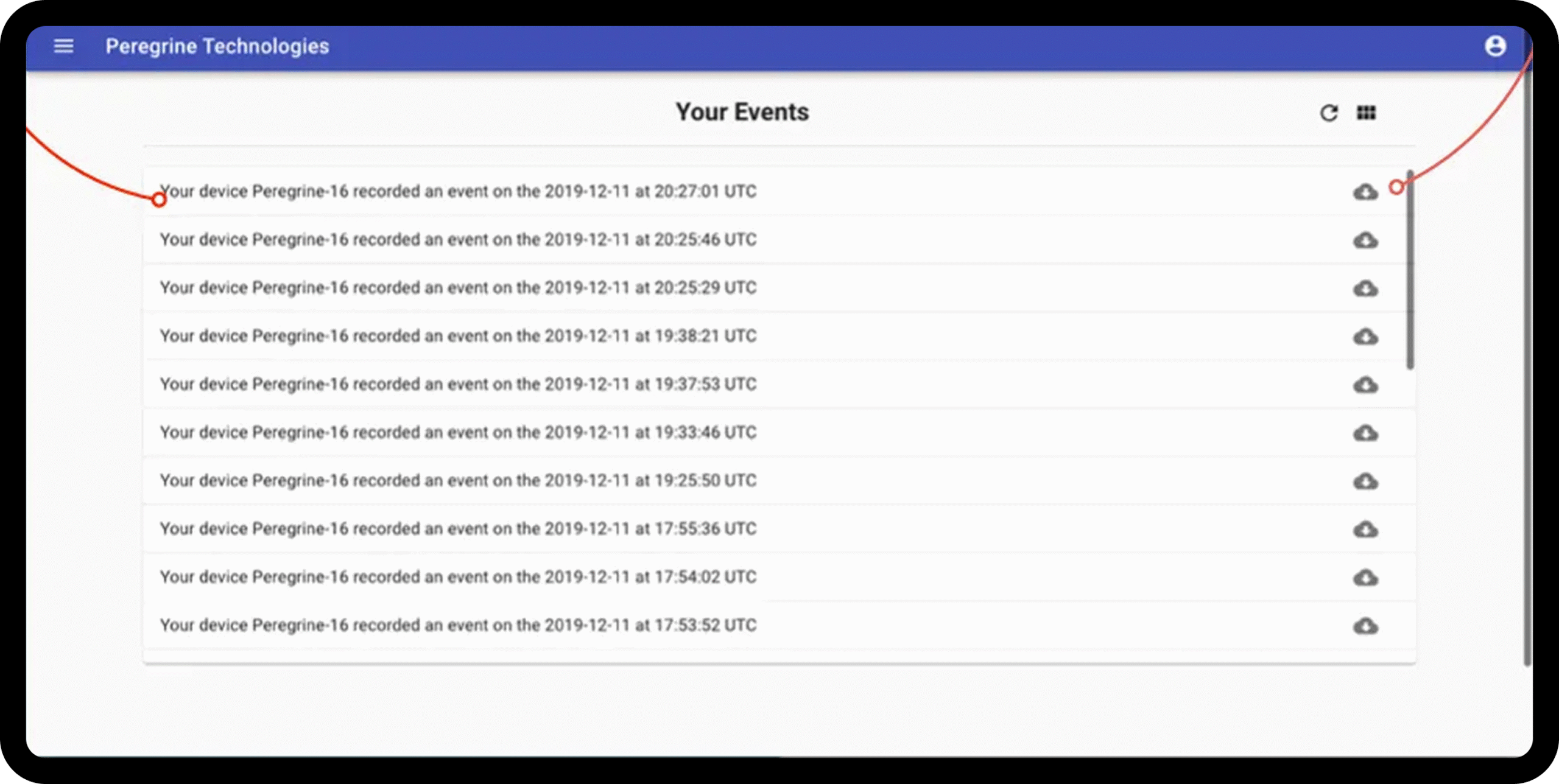
No usable product or UI
As the first and only designer, I was tasked with designing an MVP from the ground up. The product needed to:
Deliver immediate value to skeptical customers
Begin collecting structured data to support AI model training
Help secure the startup’s next round of funding
The starting point for the dashboard
How to effectively leverage existing technology to create a product that delivers significant value, gaining the trust of fleet managers and encouraging widespread adoption of our smart dash cam?
USER INSIGHTS
User Intelligence: Finding the Right Leverage Point
Before diving into design, I needed to understand the landscape. Who were our users? What were their pain points? This included not only fleet managers but also our internal stakeholders – the data science and ML teams.
With limited resources, a pragmatic research approach was essential.
To maximize impact, my research approach included:
Competitor and desk research
Internal interviews with engineers and stakeholders
Pilot data from early test fleets
Strategic partnership with the Alexander von Humboldt Institute (HIIG)
Key Insight
Data Unreliability: Existing solutions struggled with data accuracy, leading to disputes and mistrust.
Lack of Context: Incidents were recorded, but the “why” remained a mystery, hindering effective driver training and safety improvements.
Data Overload: Fleet managers were drowning in data, struggling to extract actionable insights.
It became clear that the key to wider adoption was demonstrating clear and immediate value to fleet managers in exchange for their participation in data collection.
While the MVP was built with multiple user groups in mind — including internal teams and drivers — this case study focuses on the fleet manager experience. Their perspective was key to shaping the product’s first version and proving its real-world value.
STRATEGIC FOCUS
Prove Value with One High-Leverage Workflow
Instead of spreading efforts thin across a full platform, I prioritized accident and event management as the core use case. Why?
It directly impacted customer ROI (faster reviews, better safety coaching).
It provided valuable labeled data to train AI models.
It made it easy to tell a clear product story to customers and investors.
MVP Scope
Events Library – Triage and prioritize incidents
Event Detail View – Understand root causes and driver behavior
EXPERIENCE DESIGN
From Raw Footage to Actionable Insight
Events Library – Control the Noise
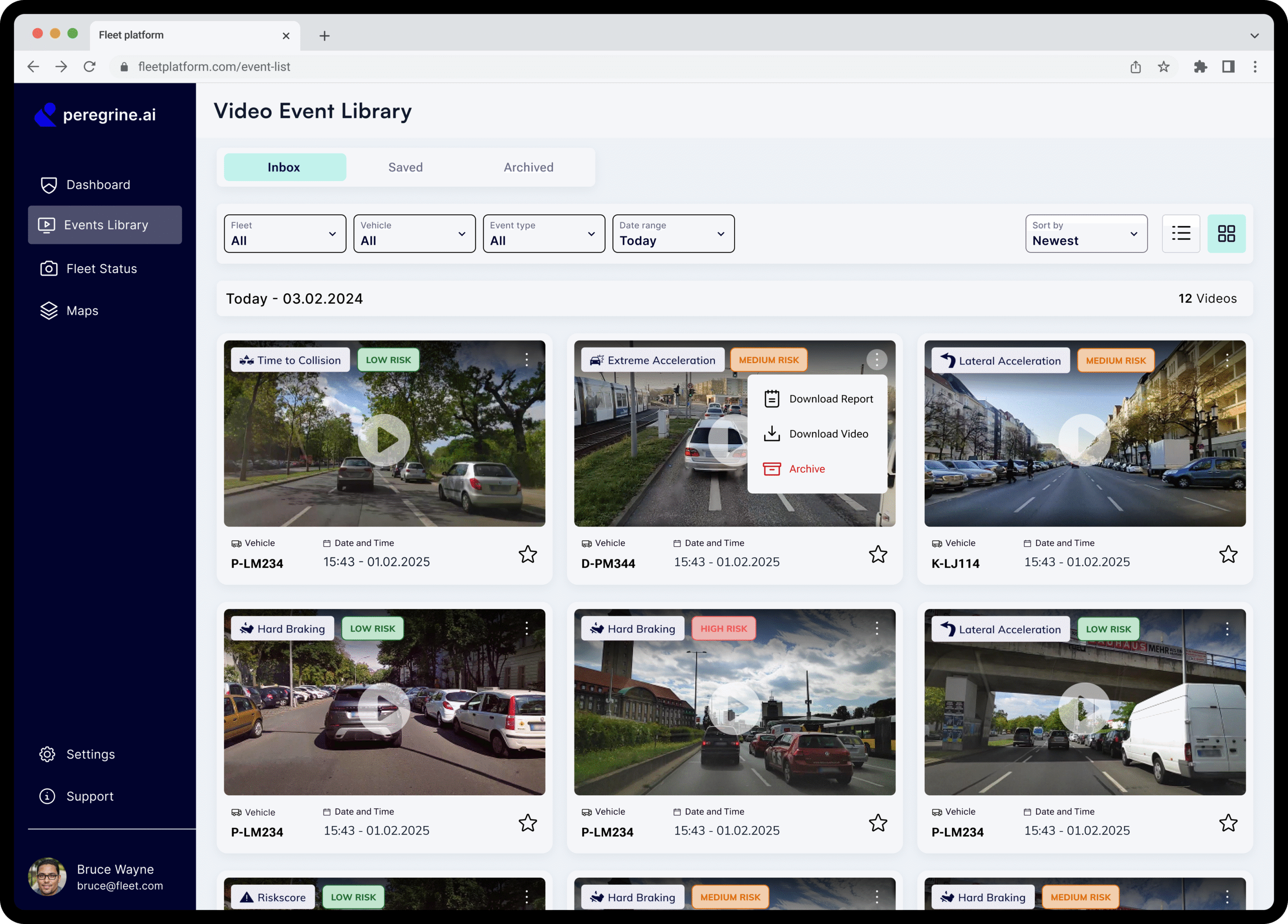
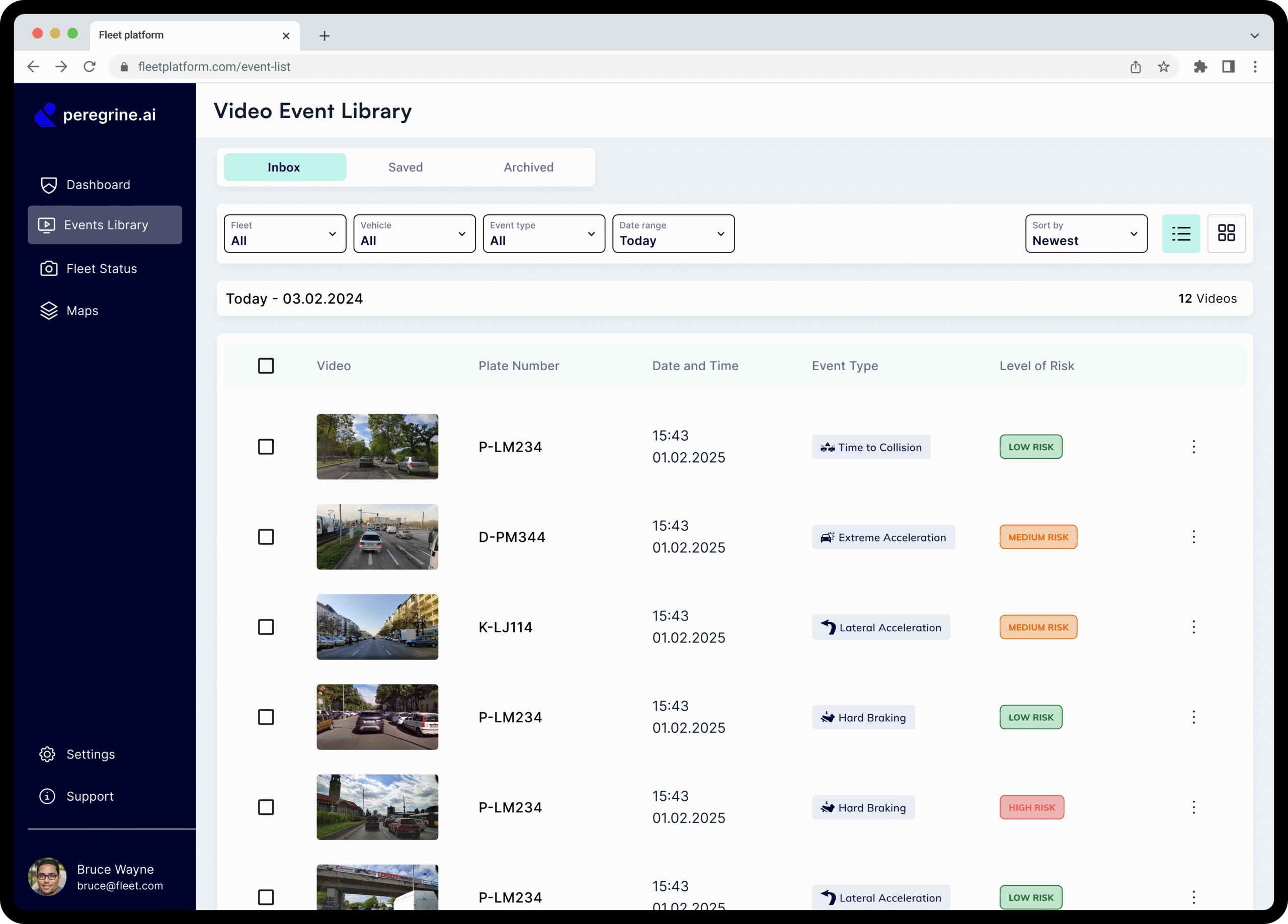
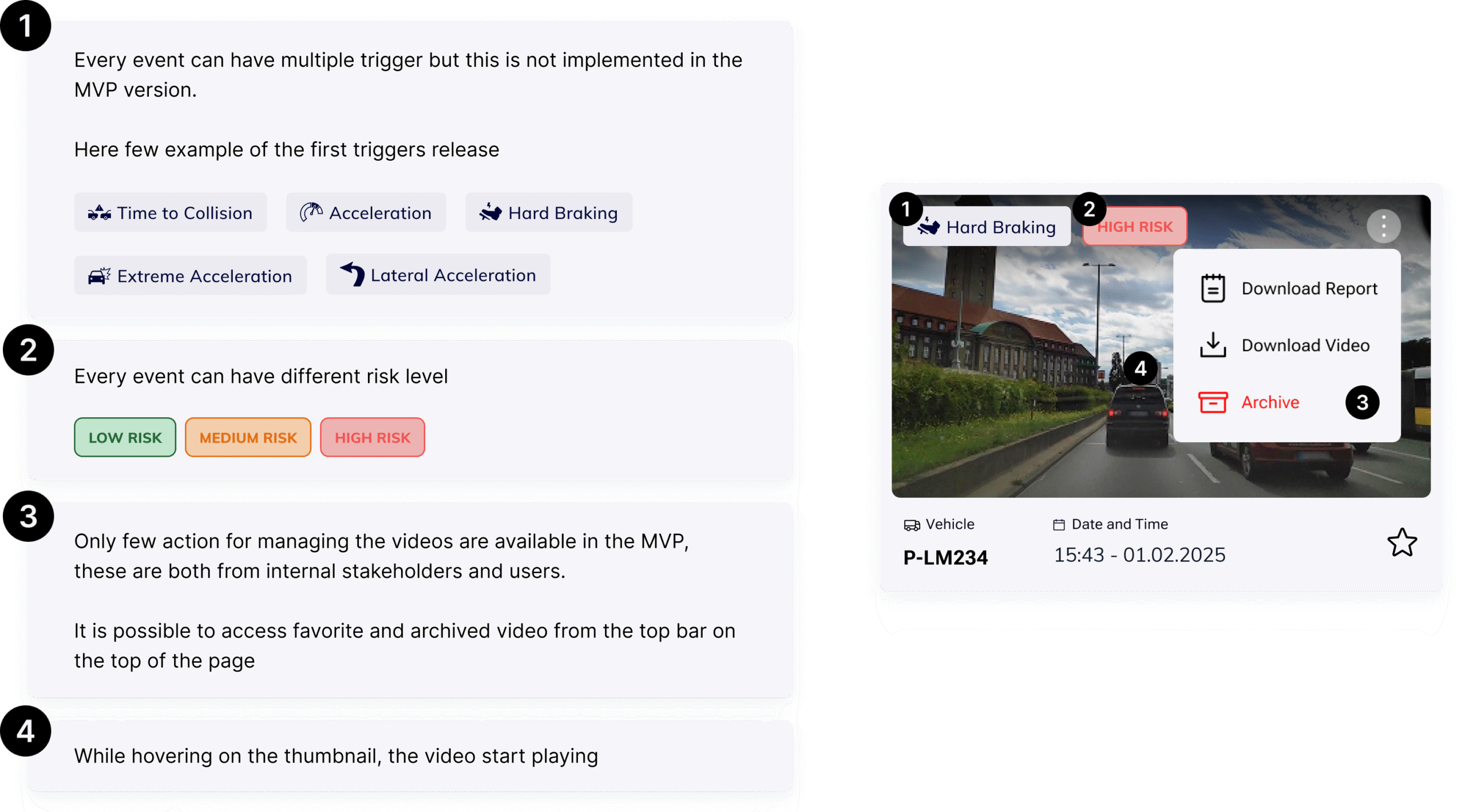
This page was designed to provide a clear and concise overview of all recorded events. Robust filtering and sorting capabilities allowed fleet managers to quickly identify high-risk incidents, prioritize their attention, and reduce data overload. Visual cues and clear labeling further enhanced usability, making it easy to navigate and understand the information presented. This page provided immediate value by streamlining incident review and management.
Key Features
Robust filters by event type, location, severity, etc.
Visual hierarchy and color cues to reduce scanning time
Future-ready architecture (e.g., planned driver-level filtering vs device ID)
Event Detail View – Understand the “Why”
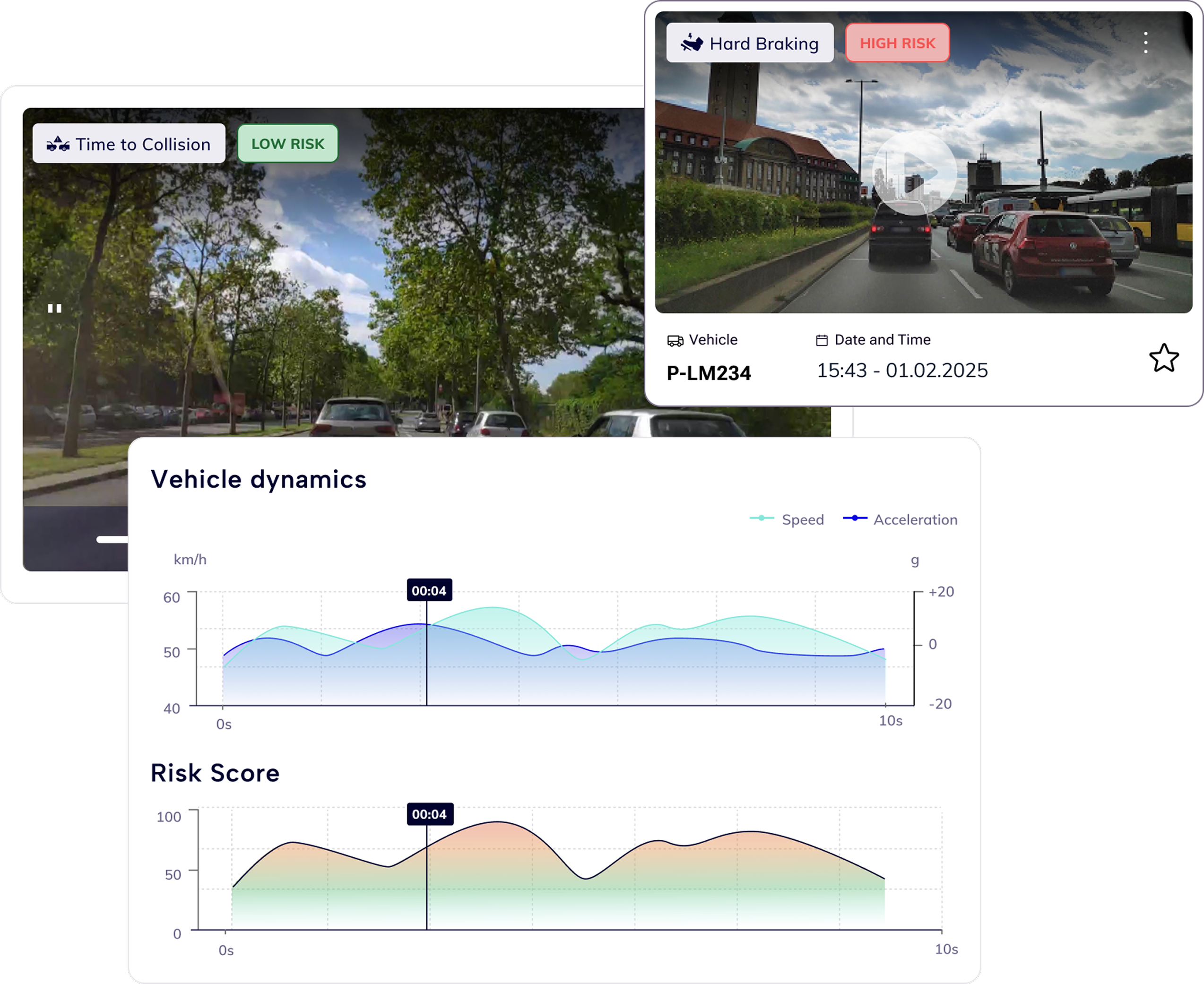
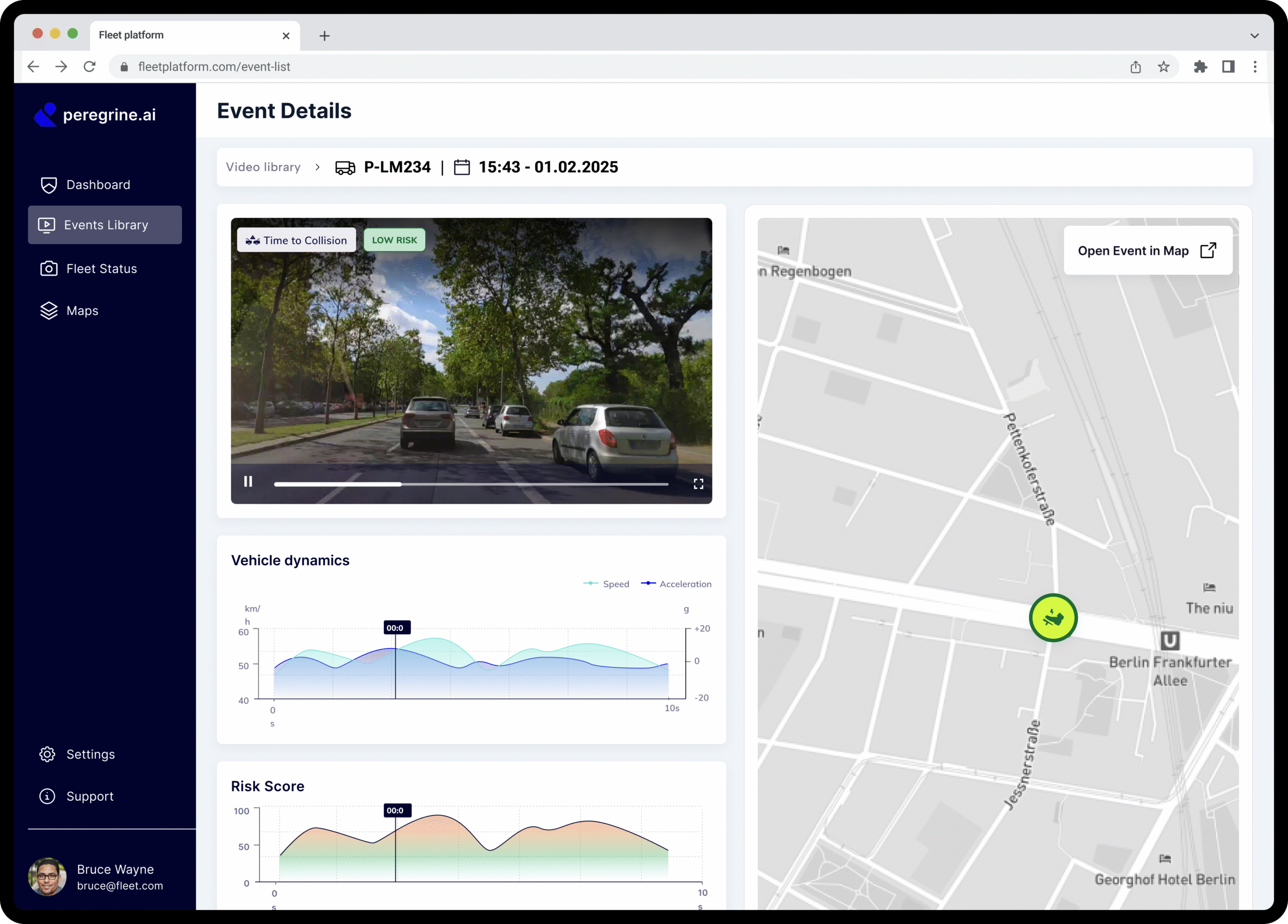
The Detailed Event View provided the crucial context needed to understand each event. Synchronized video playback with data plots (speed, acceleration, braking force) allowed fleet managers to see exactly what happened and correlate it with driver behavior. Event location on a map and relevant metadata provided further context, giving a comprehensive view of the event. This page offered deeper insights, enabling more effective driver coaching and safety improvements.
Key Features
20-second video clips (10s before/after trigger)
Synchronized data graphs (speed, braking, acceleration)
Interactive slider, map, and metadata for full context
With no way to support automated alerts yet, I made filtering the hero of the interface — surfacing high-risk events fast and clearly. It was a deliberate choice: prioritize clarity and control now, while laying the groundwork for future automation.
NAVIGATING CONSTRAINTS
Navigating Constraints with Creativity
False Positives
Initial dashcam data suffered from frequent false positives, jeopardizing the reliability of automatic notifications.
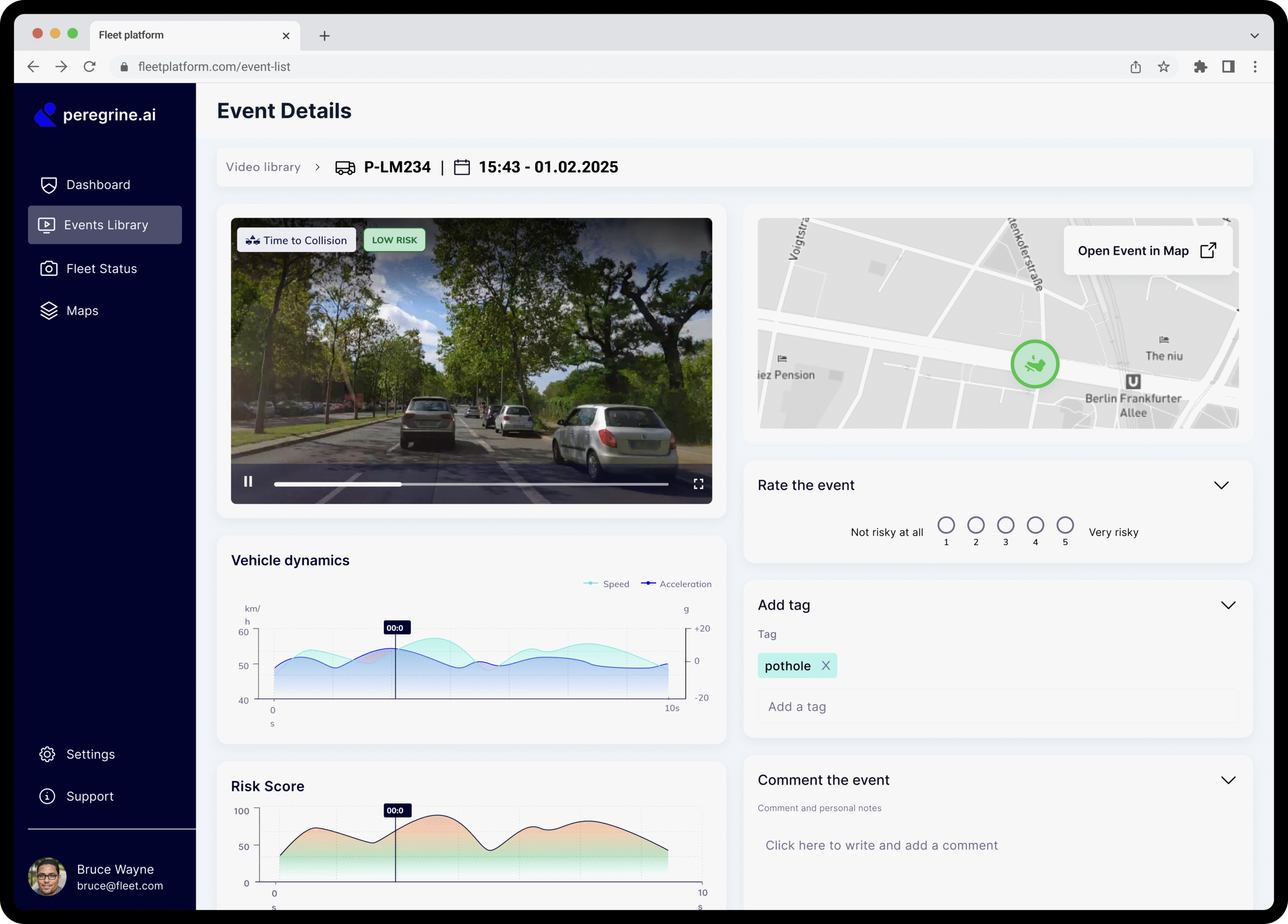
Solution: I added a manual video management system so both internal and external users could mark irrelevant events and give more information to train Ai for future development. This improved trust and provided better training data for ML.
The interface of the internal stakeholder with additional ML training system for AI
Missing Context: No automated incident explanation yet
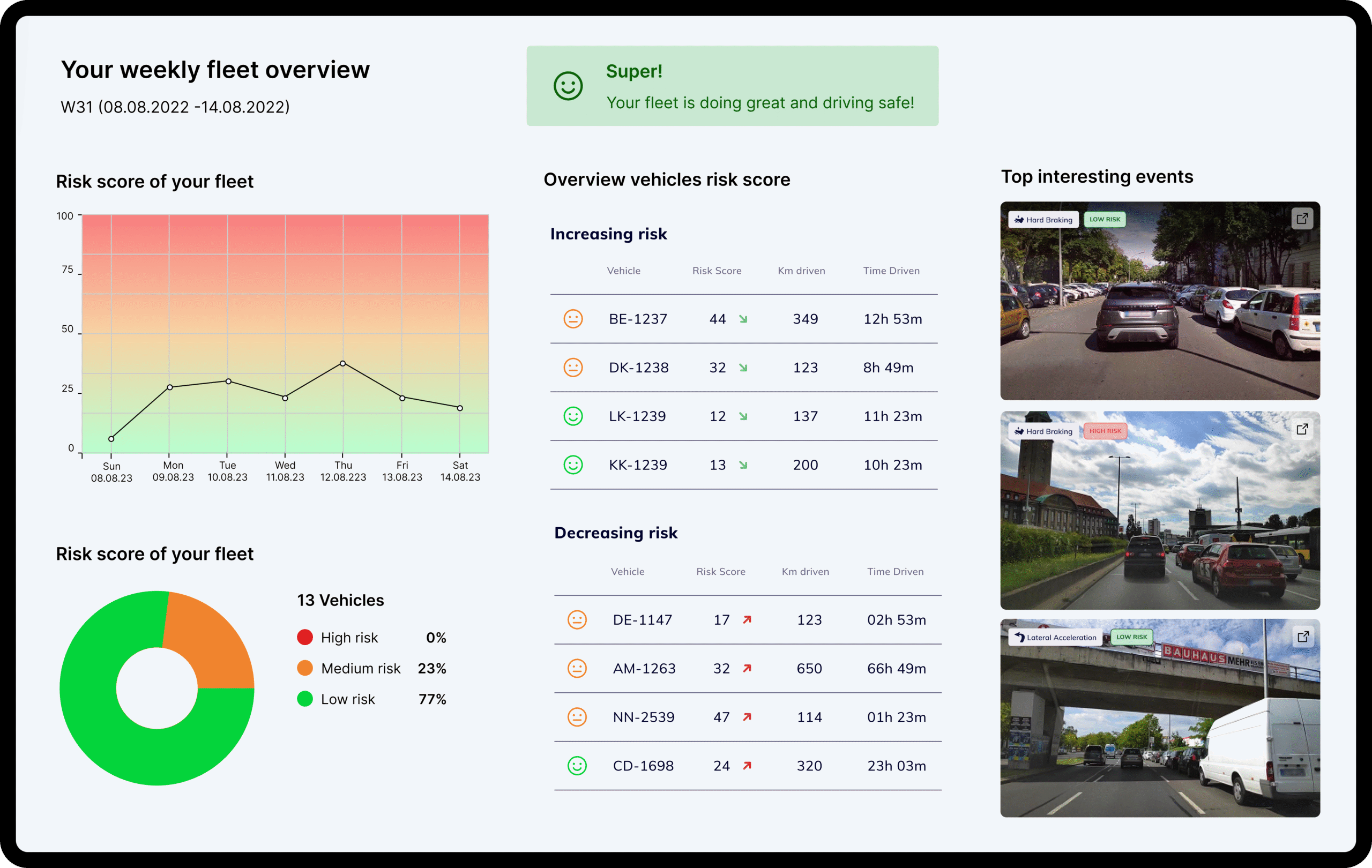
Solution: Collaborated with the data team to deliver manually curated weekly risk reports. These acted as a “sneak peek” of future AI capabilities.
Example of report sent out to clients – became later an interactive dashboard in the product
IMPACT
Business Impact
The MVP wasn’t just a functioning interface — it was a proof of concept for the business. By delivering a usable, impactful product, we were able to:
Enable adoption with first customers and pilot fleets
Improve AI training data through structured feedback loops
Secure funding thanks to a usable, visual product story
Anchor the product vision and create internal alignment
Introduce UX maturity into a deeply technical environment
The MVP streamlined accident management, improved data reliability, and gave fleet managers real, actionable insights — ultimately validating our product vision and helping secure a critical funding round.
NEXT STEPS
Looking Ahead
The MVP laid the groundwork for growth — both in product and organizational culture. Next priorities included: